On
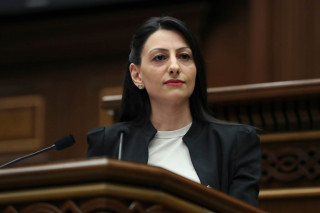
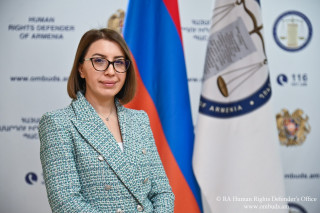
March 3, the Human Rights Defender of the Republic of Armenia, Ms. Anahit
Manasyan participated and delivered an opening speech at the workshop entitled
“Gender Equality as a Pillar of Democratic Elections.”
Welcoming
the participants and emphasizing the importance of holding the workshop ahead
of the national elections, the Human Rights Defender noted that the discussion
provides an important opportunity to raise issues of ensuring inclusiveness and
gender equality in the electoral process, which are of key importance in terms
of the proper organization of electoral processes.
The
Human Rights Defender stressed that although positive and significant
developments have been recorded in recent years, particularly an increase in
women’s representation in the National Assembly and other bodies, a number of
issues still persist in this context and require a consistent and systemic
approach.
Referring
to the exercise of the right to be elected, Ms.Anahit Manasyan noted that
prejudices and stereotypes hindering women’s participation in public life
continue to persist, especially in regional and rural communities. According to
the Human Rights Defender, overcoming such stereotypes requires continuous
joint efforts.
“Particularly
in regional communities, the perception still prevails that a woman should
primarily be engaged in “household duties”, child-rearing and “family
responsibilities”. Such perceptions of social roles continue to remain serious
problem from the perspective of ensuring women’s participation in public life,”
Ms. Anahit Manasyan stated.
In
the context of challenges related to gender equality and women’s rights, the
Human Rights Defender also referred to problems encountered in her own public
activities, highlighting the widespread cases of targeting women in the public
and media spheres, including on social media. According to Ms. Anahit Manasyan,
such phenomena deter many women from participating in political and public
processes.
The
Human Rights Defender paid particular attention to groups of women in
situations of multiple vulnerability. In particular, women’s participation in
electoral processes within national minority communities remains highly
limited. As an example, the Human Rights Defender referred to the low level of
women’s involvement in the Yazidi community.
Ms.
Anahit Manasyan also emphasized the importance of expanding the participation
of women with disabilities in electoral processes, noting that special and
targeted attention is required in this regard, both from the perspective of
exercising the right to elect and the right to be elected.
The
Human Rights Defender also specifically referred the insensitive use of issues
concerning women in electoral processes and their instrumentalization for
political purposes, considering it a serious systemic problem. "Political
actors often do not realize that they are using problematic speech and
targeting women. Certain mass media networks and representatives of the
professional community also contribute to deepening this phenomenon by
contributing the dissemination of such discourse."
The
Human Rights Defender underlined the need for coordinated and systematic
activity by all stakeholders — including in the education sector and
professional communities — to foster gender-sensitive and responsible
approaches.
Concluding
her speech, Ms. Anahit Manasyan expressed gratitude to the UNDP, partners of
the Central Electoral Commission of Armenia, representatives of civil society
and state bodies for their efforts in keeping the issue on the public agenda
and addressing existing problems.
Ms.
Lilit Varagyan, Deputy Head of the Research, Expertise and Educational Center
of the Human Rights Defender’s Office, participated in the panel discussion
held within the framework of the workshop.
The
workshop was organized by the Central Electoral Commission of Armenia within
the framework of the UNDP programme “Fostering Reforms for Transparent and
Inclusive Electoral Systems in Armenia,” funded by the European Union, the
Governments of Germany, Norway and Sweden, and implemented jointly with International
IDEA in partnership with the Central Electoral Commission of Armenia.

 Հայերեն